
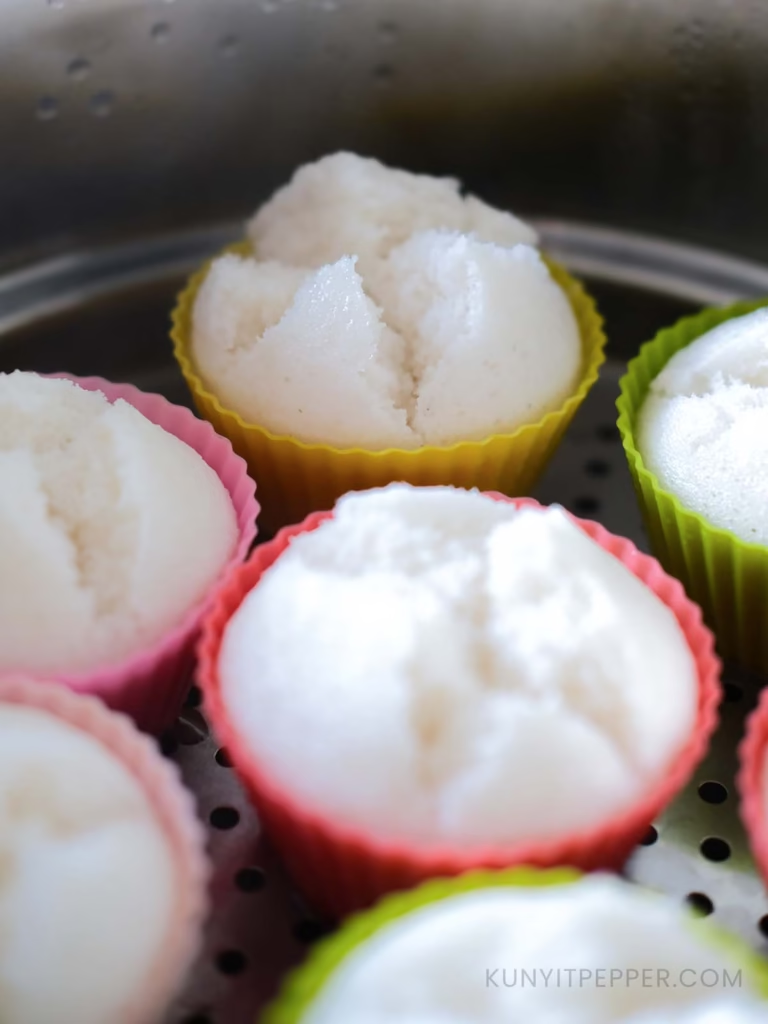
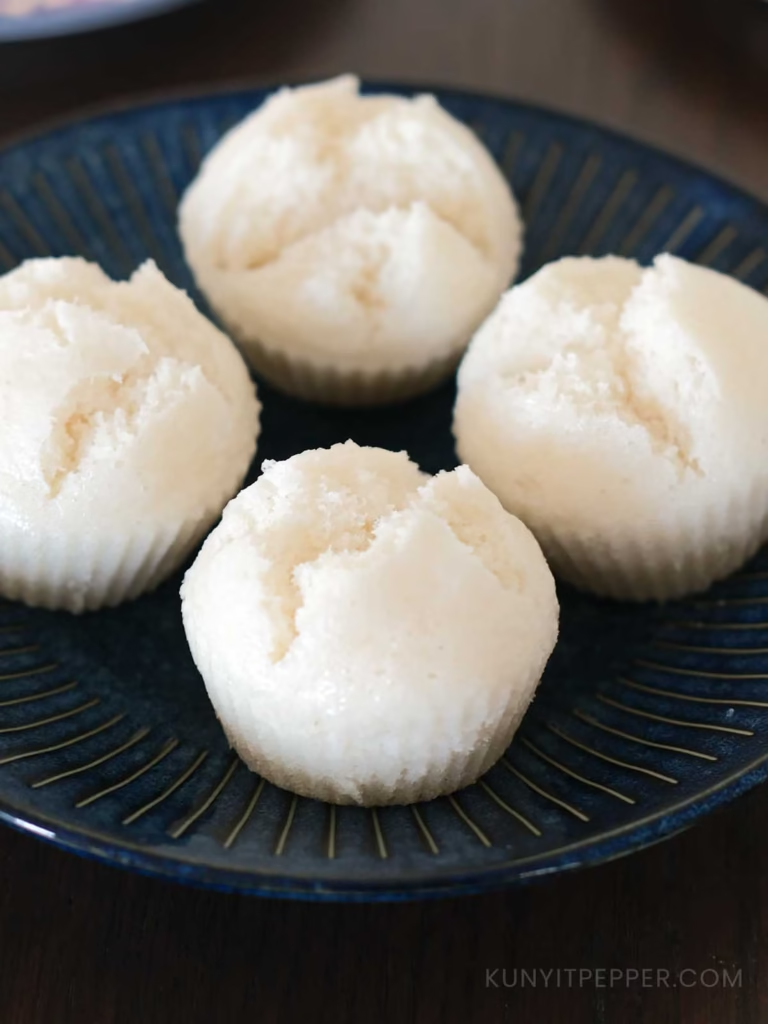
Apam Beras is a Malay adaptation of the Chinese sweet steamed rice cake, also known as Bai Tang Gao. Known for its pillowy-soft, airy texture, it is often enjoyed as a light breakfast or during afternoon tea.
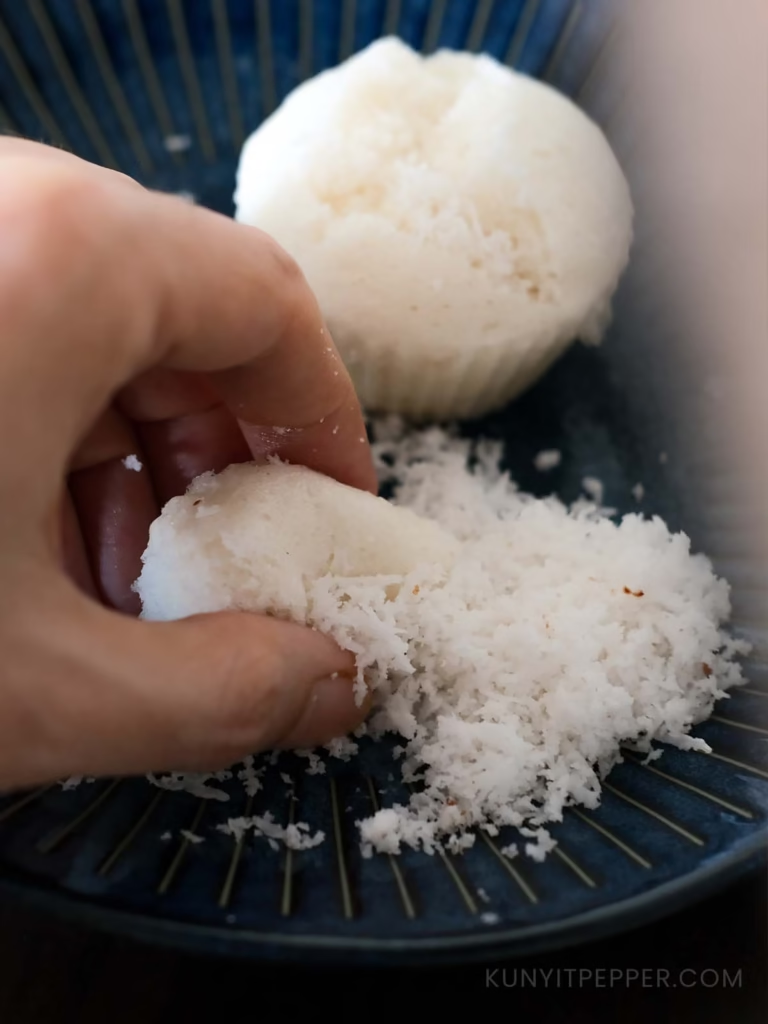
Some prefer to pair this Malaysian steamed sweet rice cake with freshly grated coconut (lightly salted), but it is just as good on its own.
Table of Contents
- How Fermented Steamed Sweet Rice Cake is Made (Traditionally)
- Where This Apam Beras Recipe Comes from
- Ingredients To Make Apam Tapai Nasi / Fermented Steamed Rice Cake
- Tools Needed
- Important tips when making fluffy and soft steamed rice cake
- FAQ
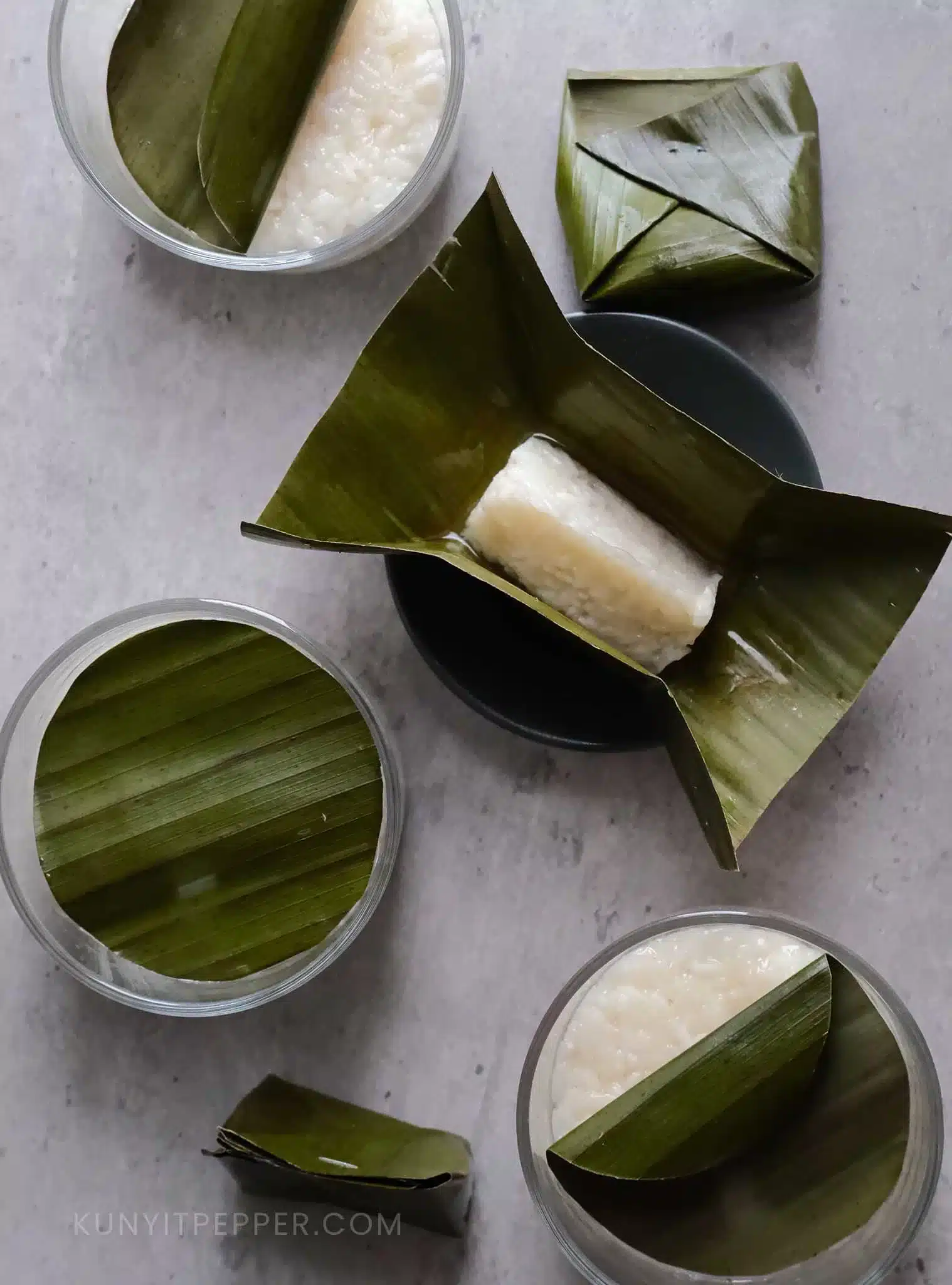
- Other Fermented Rice Recipes
How Fermented Steamed Sweet Rice Cake is Made (Traditionally)
This version of fermented steamed rice cake is made of cooked rice, rice flour, sugar, yeast and Eno. Before commercial instant yeast/dry yeast became widely available, this cake was traditionally fermented using ragi tapai, a locally made yeast starter made from spices.
- Cooked, room-temperature rice (most often leftover) is mixed with crushed ragi and left to ferment for about two nights to create the right microorganisms.
- The fermented rice is then blended with rice flour, sugar, and water to create a thick batter and left to ferment for the 2nd time for several hours (ideally 4h).
- And just before steaming, Eno fruit salt is added to the batter, making it bubbly and lighter, which helps to create a soft, airy texture that apam beras is known for. The batter is then steamed over boiling water until the cakes bloom.
This method of making apam beras is also known as Apam tapai nasi among Malays.
Where This Apam Beras Recipe Comes from
This recipe is inspired by my late grandmother, whose apam was her specialty. My grandmother was of Chinese descent from Perak. She passed away long ago, but the memory of watching her make this fermented sweet rice cake, and its taste, is still fresh in my mind. Over time, I tested the recipe with my mother to get as close as possible to her mother’s version, and after a few trials, she approved it. P/S: Getting approval from my mother is not a simple task.
Apam is a well-loved sweet rice cake introduced by early Chinese immigrants and later adapted into local home cooking. Because the work was long and physically demanding at the time, Chinese miners and Malay paddy field farmers relied on simple, filling, and cheap ingredients. Although apam was once considered a humble dessert, it was also loved by royalty in Perak. Today, this steamed sweet rice cake remains a well-known rice dessert in the state.
Ingredients To Make Apam Tapai Nasi / Fermented Steamed Rice Cake
- Cooked rice – Use the rice you make on the same day to avoid spoilage, and make sure it’s cooled before adding the ragi. I like using jasmine rice, it makes the cake slightly fragrant.
- Ragi Tapai – This ragi ball is used to make tapai (sweet fermented rice/cassava). There is no substitute for this in this recipe.
- White Sugar – White sugar is used to get the milky white color.
- Rice Flour – Do not mistake ‘rice flour’ with ‘glutinous rice flour’. The later have more starch and is stickier than plain rice flour.
- Eno – Use plain, unflavored Eno in a blue packet (4.3g). It helps trap air in the batter, allowing the rice cake to achieve a soft, fluffy, and fine texture.
- Garnishing (Optional) – 1 cup of freshly grated coconut + 1/4 tsp of salt
Tools Needed
- Blender
- Steamer
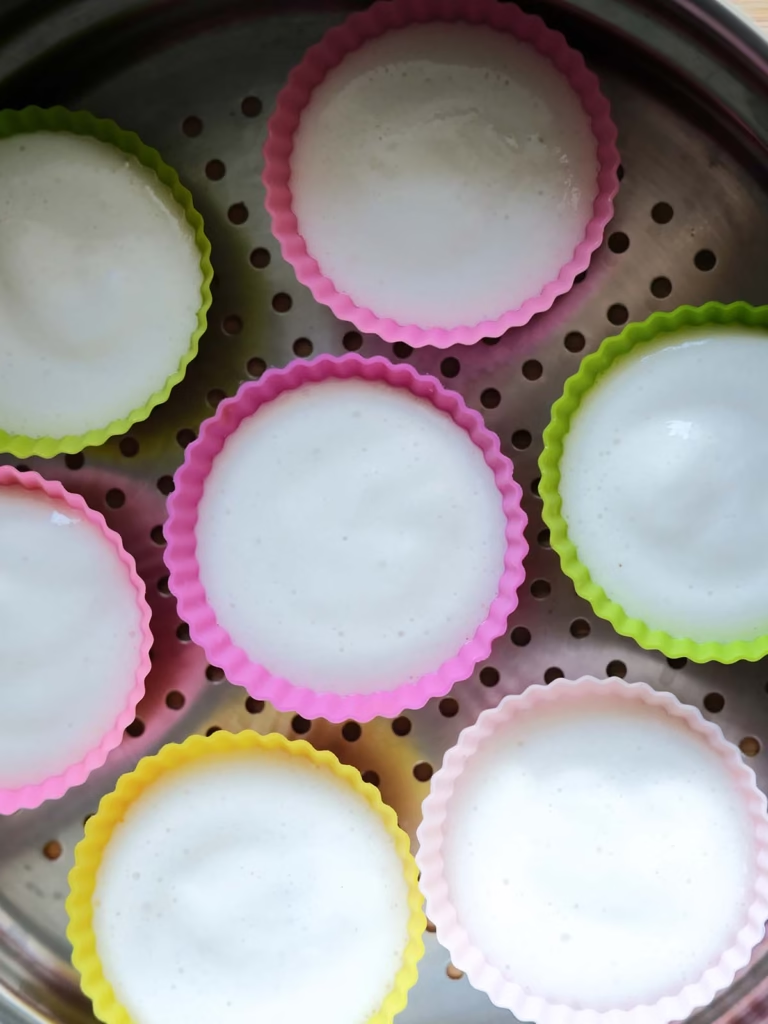
- I use a silicon muffin mold/liners. Feel free to use a shallow bowl
- Brush
- Spatula
Important tips when making fluffy and soft steamed rice cake
- Make sure the water in the steamer is fully boiling before you start steaming the batter. This is important to achieve the open, blossoming effect.
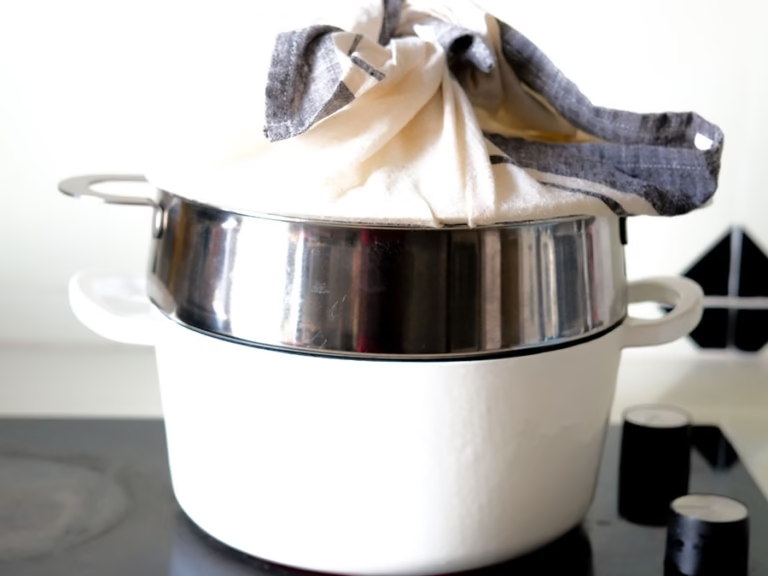
- Wrap the lid with a clean cloth to prevent water from dripping onto the cakes. If using a bamboo steamer, no need to do that.
- Divide the batter into two portions. Since Eno needs to be added just before steaming, portioning the batter helps prevent it from losing air while waiting to be steamed.
- Lift and pull the batter up high with a spatula after adding the Eno, until it is silky smooth. This helps create air in the batter and achieve the finest texture.
FAQ
How long can you keep this steamed sweet rice cake in the fridge?
Keep this rice cake no more than 5 days. Make sure to store them in a container with a lid or a ziplock bag to keep them fresh.
Can you make the batter ahead?
Yes, after the second fermentation, cover it with a lid and keep it in the fridge. An hour before cooking, leave it outside at room temperature before adding Eno.
Where to find ragi tapai?
Ragi Tapai can be found in a local mart (Malaysian, Indonesian or Thai mart). If you’re in Southeast Asia, you can find it online on Shopee.
Is ragi tapai the same as ragi tempeh?
No, ragi tapai and ragi tempeh are different types of starter cultures. They produce different fermentation results, so they should not be used as substitutes.
Other Fermented Rice Recipes
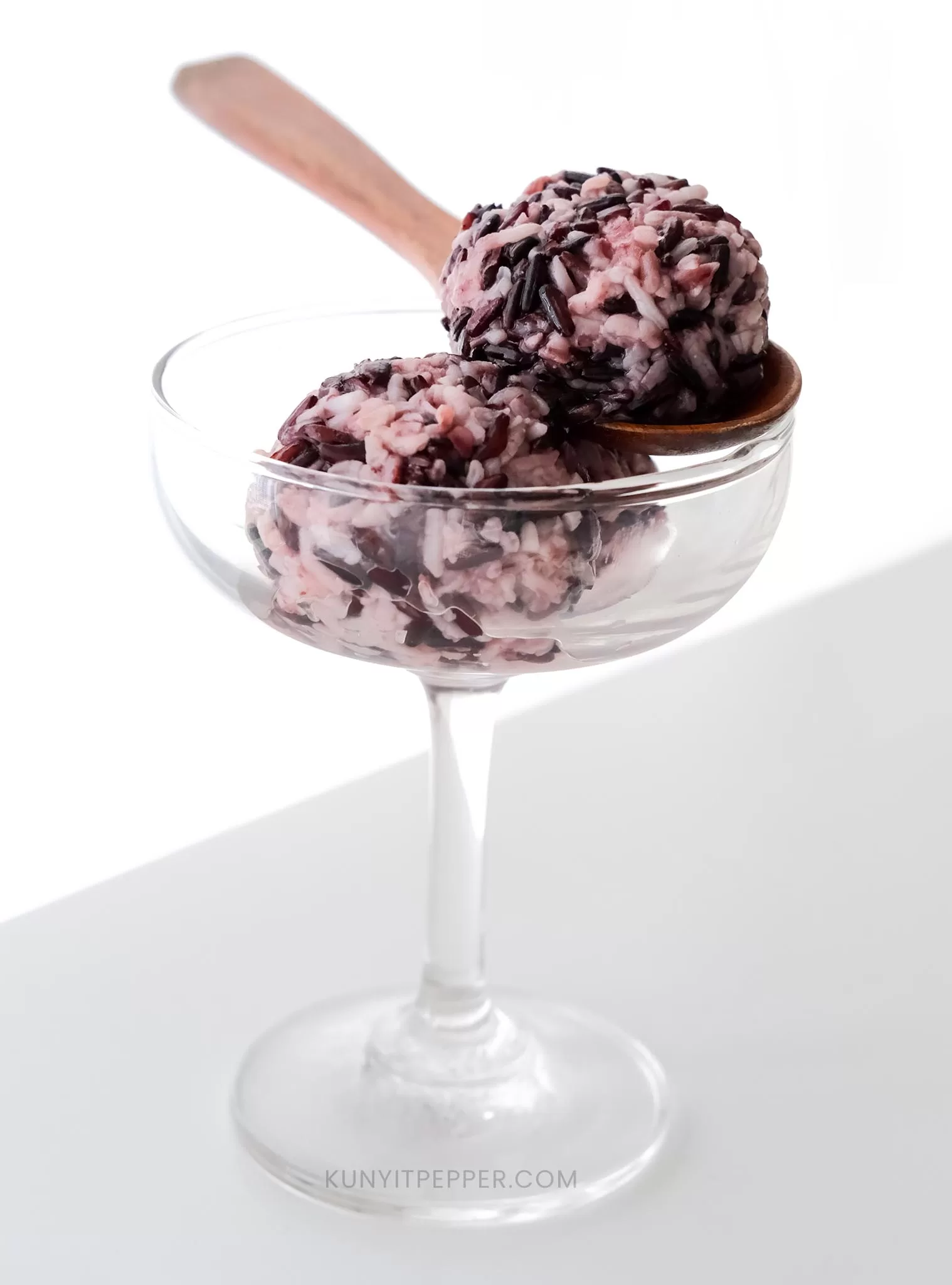
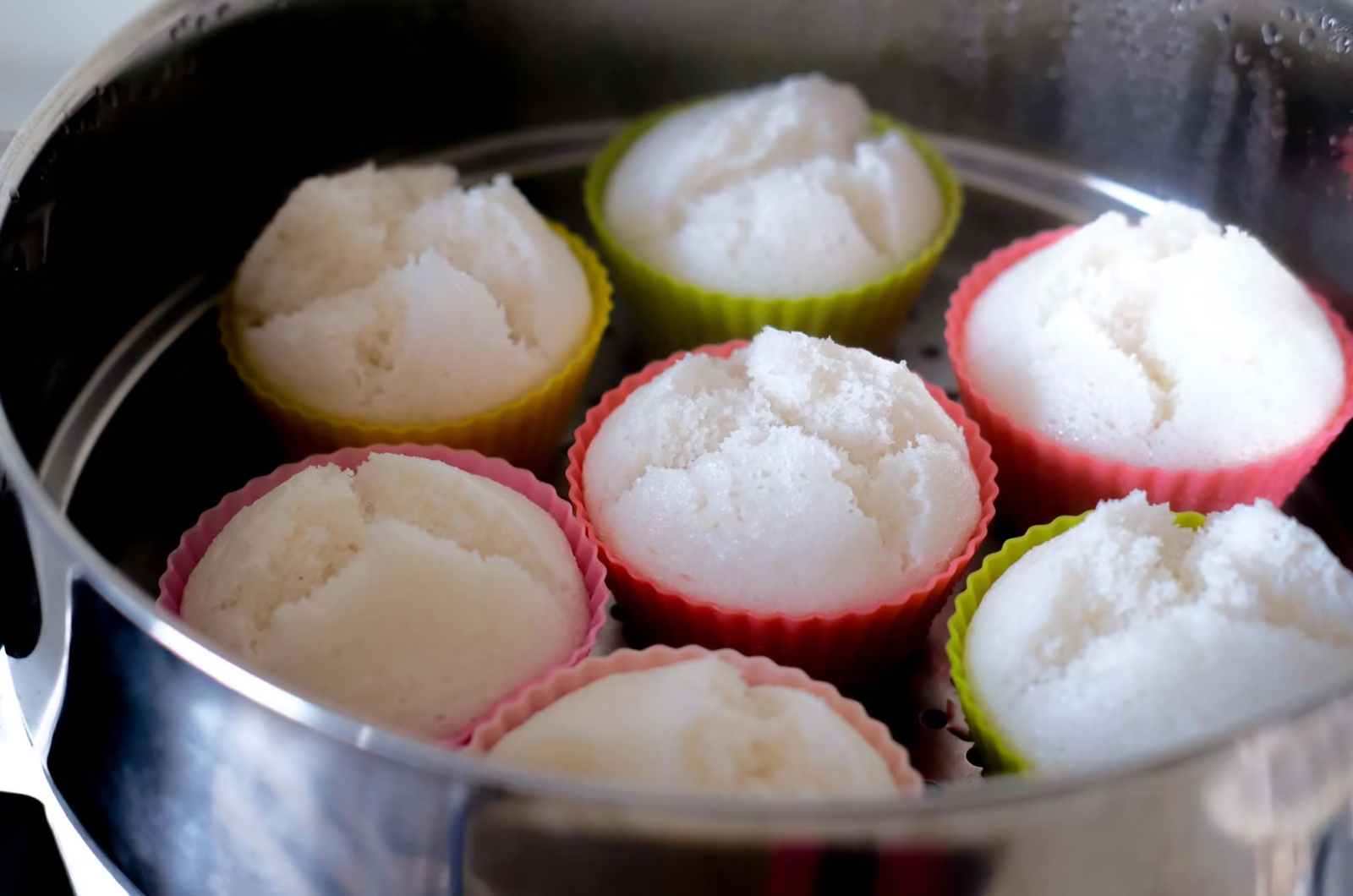
Soft Apam Beras – Fermented Sweet Steamed Rice Cake
25
pieces15
minutes120
kcal2
nights4
hoursSoft and pillowy steamed sweet rice cake, this beloved Malaysian apam beras is made with ragi fermentation for a light and fluffy texture.
Ingredients
2 cups Cooked Rice (room temperature)
1/2 tablet Ragi tapai yeast
3 cups Rice Flour
1 cup White Sugar
2 cups Water
2 packet Plain Eno (4.3g)
- Serve with
1 cup Freshly grated coconut (100g)
1/4 tsp Salt
Directions
- Ferment the cooked rice (2 nights)
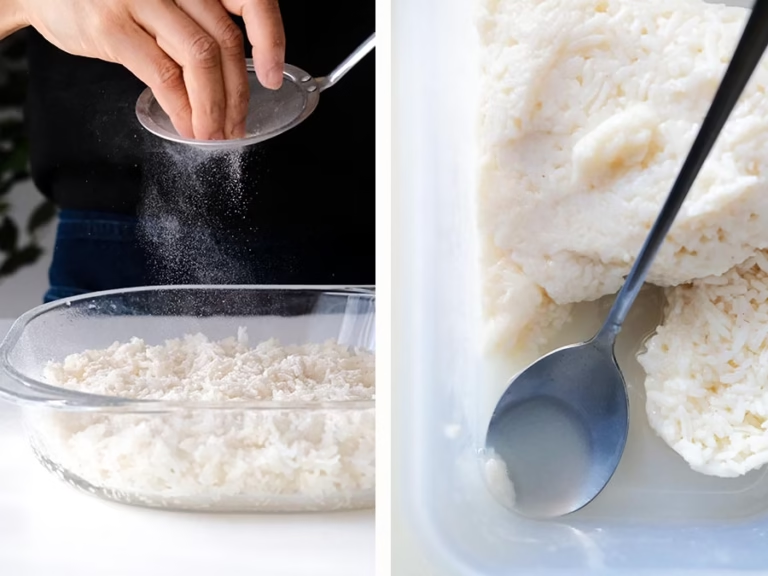
i) Crush half of the ragi ball into a fine powder. This can be done with a dry blender or by rubbing it through a fine-mesh strainer. Sprinkle the powdered ragi evenly over the cooked rice.
ii) Add 1 tbsp of water and mix them well with a spoon.
iii) Cover with a lid and leave it in a dark and warm place.
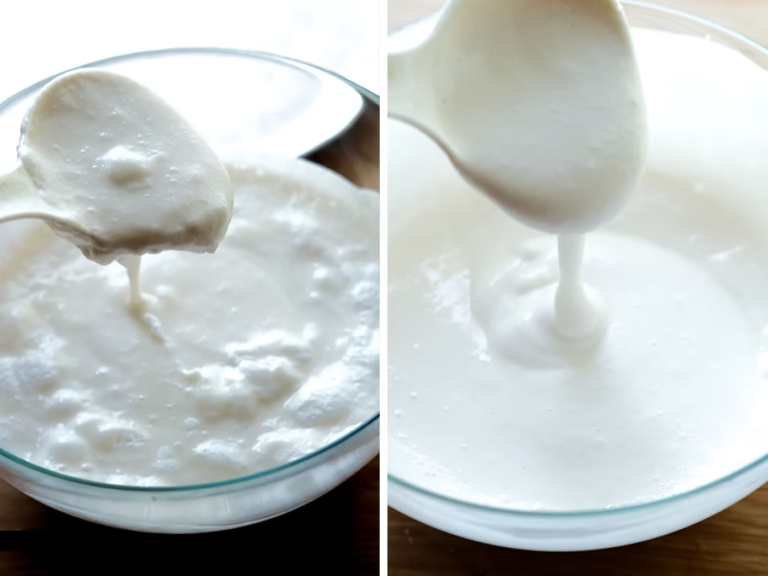
After 2 nights of fermentation, the rice should be slightly wet when pressed with a spoon (like the right image above). If you see mold, throw it out immediately and start over. - Blend the fermented rice with rice flour, water, and sugar until smooth, then transfer the batter to a bowl or container.
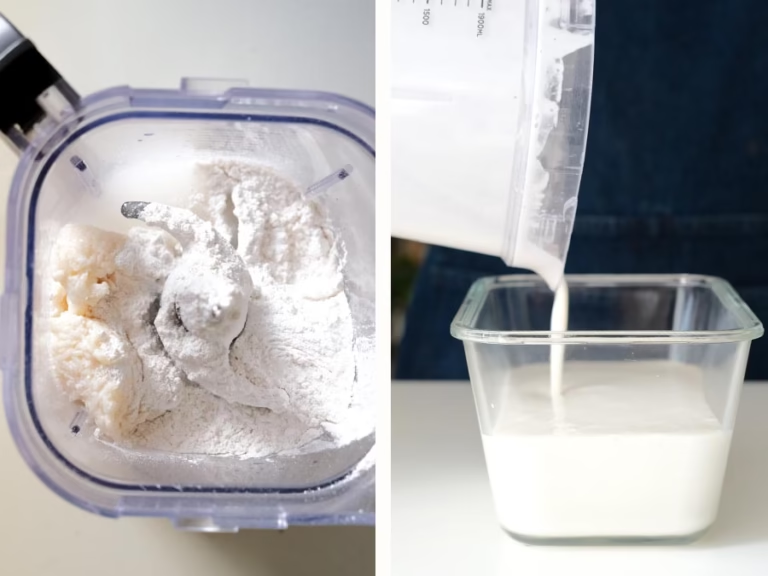
- Leave the batter to ferment for the second time, covered, on the kitchen counter for 4 hours.
- Divide the batter into 2 batches and set 1 batch aside.
- Pour 80% of the small Eno packet into the first batch. Immediately mix the mixture with a ladle. While at it, pull the batter high with the ladle repeatedly to create air bubbles until the mixture increases and is soft and bubbly.
- Boil the water in a steamer over high heat.
- Oil the muffin liners or shallow bowl. Make sure all surfaces are well greased, as this will help the batter rise.
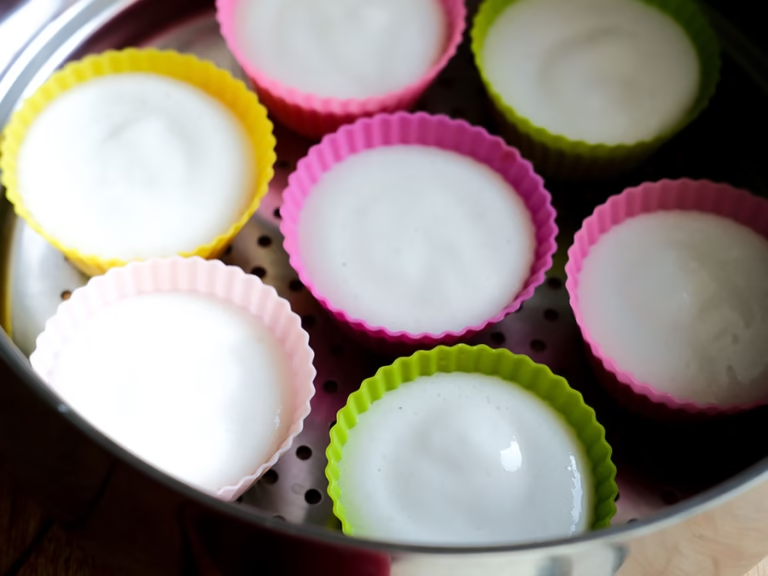
- Arrange the muffin liners in the steamer basket and gently fill each silicon mold, about 70% full with batter.
- Steam over high heat for 15 minutes. Make sure to cover the lid with a clean cloth to avoid water dripping onto the cakes.
- Once the timer is done, remove the steamed rice cakes with tongs and repeat Step 7 until finished.
- Remove the silicone liners and enjoy them warm or cold alongside grated coconut mixed with salt.
Equipment
- Ninja BlenderCheck on Amazon
- Stainless Steel SteamerCheck on Amazon
- Silicon Muffin Cups LinersCheck on Amazon
Notes
- Only add the Eno to the second batch after the first batch has finished steaming, and you are ready to steam the second batch immediately. Alternatively, keep the second batch in the fridge and add the Eno only when you are ready to cook it fresh the next day.